
Books
Torah you can hold in your hands
Rebbe Nachman's teachings were never meant to stay on a shelf. These are made to be used: at the tzion, at your table, in the quiet moments when you need something to hold onto. Each one is available on Amazon.

Hebrew and English, with the sources and the seder hishtatchus
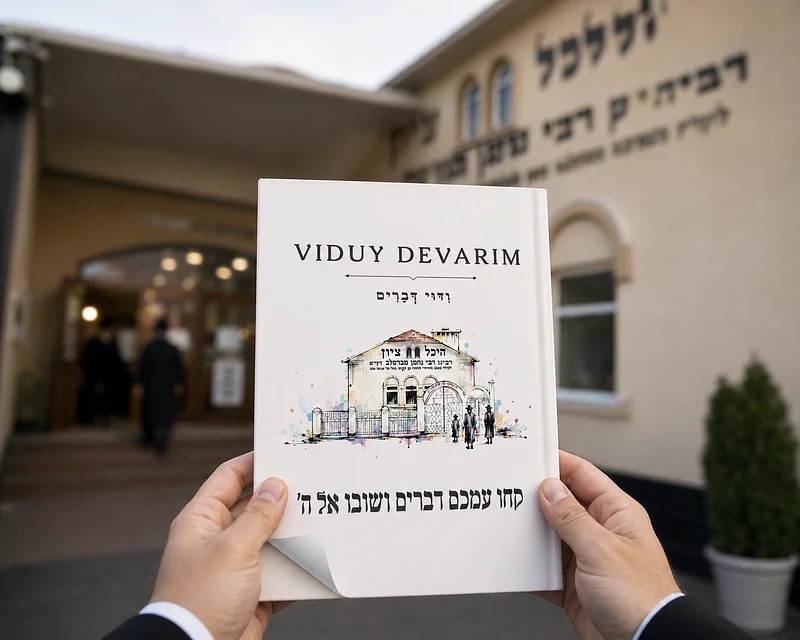
Viduy Devarim
An important part of visiting the tzion of Rabbi Nachman, and one of the least published. Viduy devarim means saying your failings out loud, in your own words, and the Rebbe placed it at the center of Torah 4.
Most people arrive knowing only the Tikkun HaKlali. This is the full seder, translated to English for the first time, with introductions drawn from Likutei Moharan, Sefer HaMiddos, Likutei Eitzos, and Likutei Halachos, the order of approaching the tzion from immersing to giving tzedakah, and a closing tefillah from Likutei Tefillos. Hebrew and English sit on facing pages, and the whole thing is pocket sized so it travels with you.
If you have never done this before, everything you need is explained.
Order Viduy Devarim
Breslov mindfulness, one page at a time
Coloring the Good Points
Rebbe Nachman taught that you have to find the good points in yourself, even the smallest ones, and that judging yourself favorably is what brings you back to life. It is one of his most well known teachings and super important to put into practice.
This book turns that teaching into something you do with your hands. Color a page, sit with a thought, and let it settle. No background in Breslov needed, and no pressure to do it perfectly, which is rather the point.
Good for adults, good for kids, good for anyone who thinks better with a crayon or marker in their hand.
Order Coloring the Good Points
The interlinear format that changes how you say it
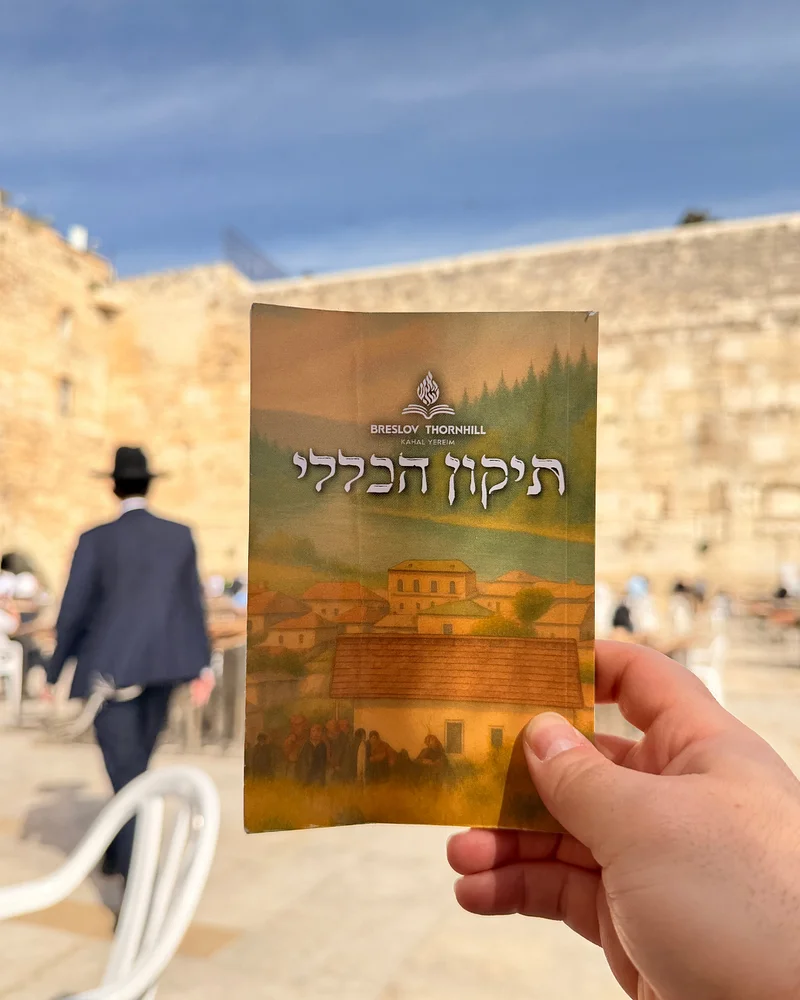
Tikkun HaKlali
The ten psalms, with the English running directly alongside the Hebrew, word by word.
Most people say the Tikkun HaKlali without knowing what they are saying. An interlinear format changes that. You can follow the Hebrew and understand it at the same time, without stopping to look anything up or losing your place. The words stop being a formula and start being a prayer.
Whether you say it daily or only when you make it to Uman, this is built to be understood.
Order the Interlinear Tikkun HaKlali